


This week, the Chairman of the Joint Chiefs of Staff put something in writing that should not have needed saying. Gen. Dan Caine told Sen. Elissa Slotkin that the Joint Force “has no plans to send Federal military personnel or Federalized members of the National Guard to polling places during the 2026 elections,” and no plans to seize ballots or voting machines. He added that he has “neither received nor anticipate receiving any unlawful order” about the military’s role in November.
It reads like reassurance. Except when you look closer at how it is built.
Let’s start with “no plans.” Caine is the wrong man to make that promise mean anything. The phrasing all but admits it. Operational plans for a domestic deployment would not originate with him. They would come down the chain—from the President, through the Secretary of Defense, to the Joint Force. Nothing has been transmitted to Caine yet, so his statement is true in the narrowest possible way: He cannot have plans he has not been given. The order that matters would come from Donald Trump through Pete Hegseth.
And which official didn’t answer the Senator? Pete Hegseth.
Sen. Slotkin sent her letter to both of them. The uniformed officer replied at the deadline; the civilian who would actually carry an order from the President let her deadline pass without a word. The one person positioned to say “this will not happen” is the one who said nothing.
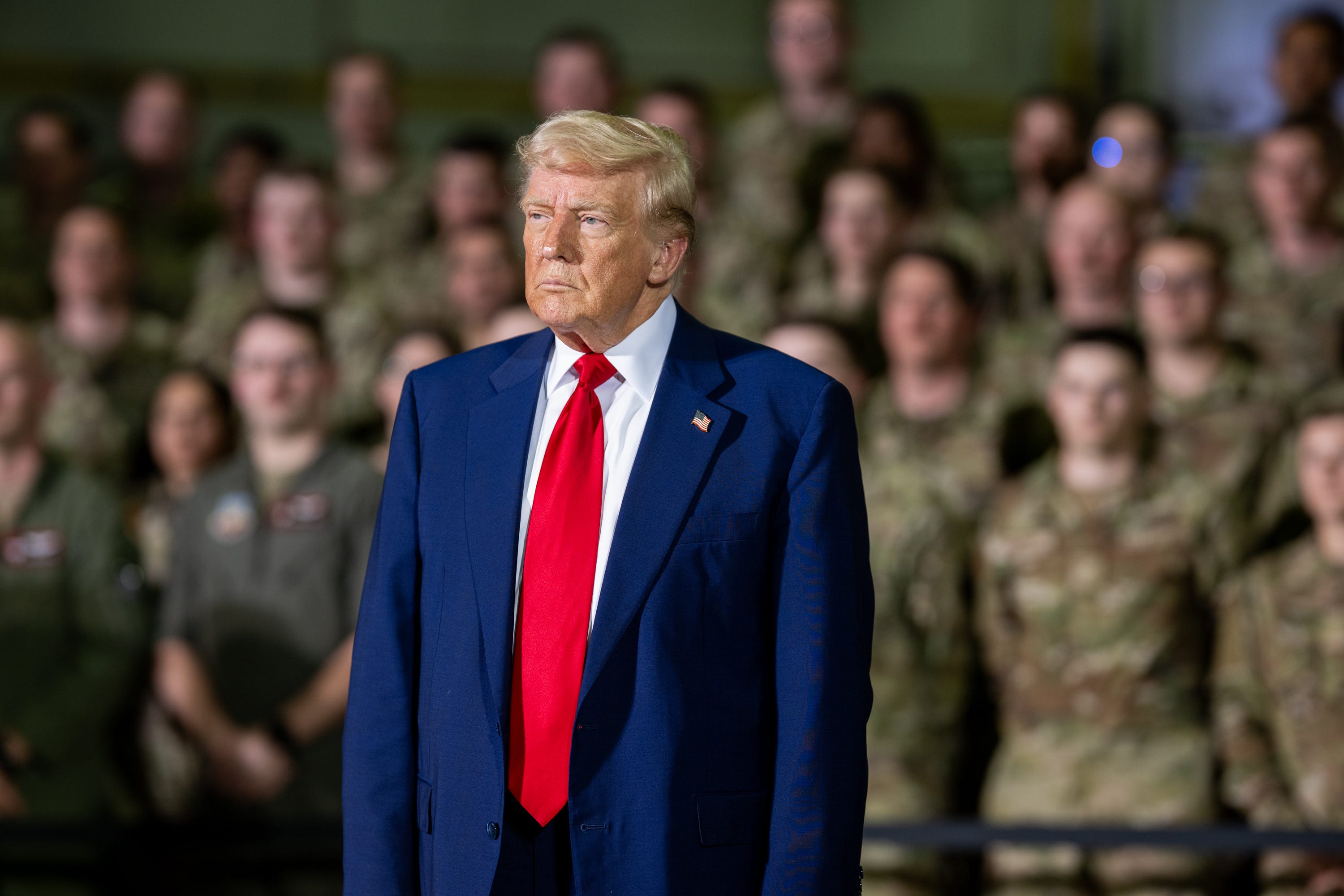
Then look at what Caine did promise. His assurance is about polling places. It is not about the blocks around them. Federal troops already deployed in American cities this year, over the objection of the governors and mayors who lead them, and the administration has treated those deployments as a template it can apply anywhere.
Promising not to put soldiers inside the precinct, while saying nothing about the streets leading to it, is not much of a promise. It is the assurance that you will not attack a hospital, while amassing forces on the perimeter and the roads that reach it. The building is technically safe. Everyone trying to get to it is not.
So the letter is not the guardrail it appears to be. It answers a question narrow enough to answer cleanly and leaves the real one open.
I have written before about why this matters. When a president uses the military as an instrument of domestic politics, the damage is not only to the communities where troops appear. It is to the institution itself.
A military that is drawn into partisan disputes, deployed to shape an outcome rather than to answer an emergency, loses the trust that makes it effective and the nonpartisan standing that makes it legitimate. That trust is difficult to build and easy to spend. Veterans understand something that is hard to explain to people who have not served: The value of the uniform depends on its distance from the ballot box, and once that distance closes, it does not reopen on command.
Which brings us to the mail.
This week a whistleblower inside the United States Postal Service warned Congress that the agency is building (in secret, in a hurry, and in apparent defiance of a court order) a new system that could keep millions of Americans from receiving a ballot this November. The account, released by Sen. Richard Blumenthal and represented by Whistleblower Aid, describes the work as “secretive, rushed, chaotic, and fundamentally flawed.” A federal judge has already blocked the underlying rule as an unconstitutional attempt by the federal government to seize authority the Constitution gives to the states. The whistleblower says the work continued anyway.
The mechanics of this scheme deserve attention, because the danger is not confined to whoever the rule was meant to catch.
Under the plan, states must send the Postal Service a list of every voter who should get a mail ballot, and the Postal Service will refuse to deliver to anyone not on it. To check the lists, the system samples batches of ballot envelopes. If it flags a single envelope in a batch—even in error—it can reject the entire batch and send tens of thousands of ballots back to the state. A system built to screen certain voters becomes, through one scanning mistake, a system that fails everyone in the mailing. The whistleblower’s word for the risk was “catastrophic.”
The two stories meet here, falling on the people that my organization, the Vet Voice Foundation, exists to serve.
For millions of Americans, voting by mail is not a convenience. It is the only practical way to participate. For active-duty service members stationed around the world, international mail is slow and unpredictable. Military families move constantly. Veterans living with disabilities rely on absentee voting because it is the most accessible way to cast a ballot, and older veterans often depend on it too. These are the voters federal law was written to protect; the Uniformed and Overseas Citizens Absentee Voting Act exists because our nation determined a long time ago that the people who defend democracy should not have fewer chances to practice it.
Those who volunteer to defend our democracy should never have fewer opportunities to participate in it. A service member who does everything right, who requests a ballot, fills it out, and mails it on time, should not lose that vote to a piece of software rushed into service to satisfy a deadline. A veteran should not have to wonder whether the troops in their city are there to keep order or to shape a result.
The United States has not yet militarized the upcoming election or completed efforts to break the machinery that delivers its ballots. But both avenues are being tested right now, in the same season, by the same forces trying to rip control of election systems from states and put them increasingly under Federal control. Caine’s letter, in theory, shows the guardrails can still hold when someone is asked to affirm them. But Hegseth’s silence, and the Postal Service’s defiance of a court, show how they can be worked around.
We veterans have a duty to note the difference, and to call it out. We swore an oath to a Constitution that gives elections to the people and the states. That oath does not end when the uniform comes off. It includes the obligation to speak when the vote itself, and the standing of the military sworn to protect it, is put at risk.
Janessa Goldbeck is a Marine Corps veteran and the CEO of Vet Voice Foundation. This article also appeared on VoteVet’s Substack.

They need to be impeached! Soon!
They're desperate, knowing Trump has done so much to poison the well. They know there's a chance they'll lose both House majorities, and by bigger margins than they can recoup in several election cycles. It may be a generation or more before there are republican majorities again, and they are willing to shoot their whole wad on suppressing the vote this cycle!