


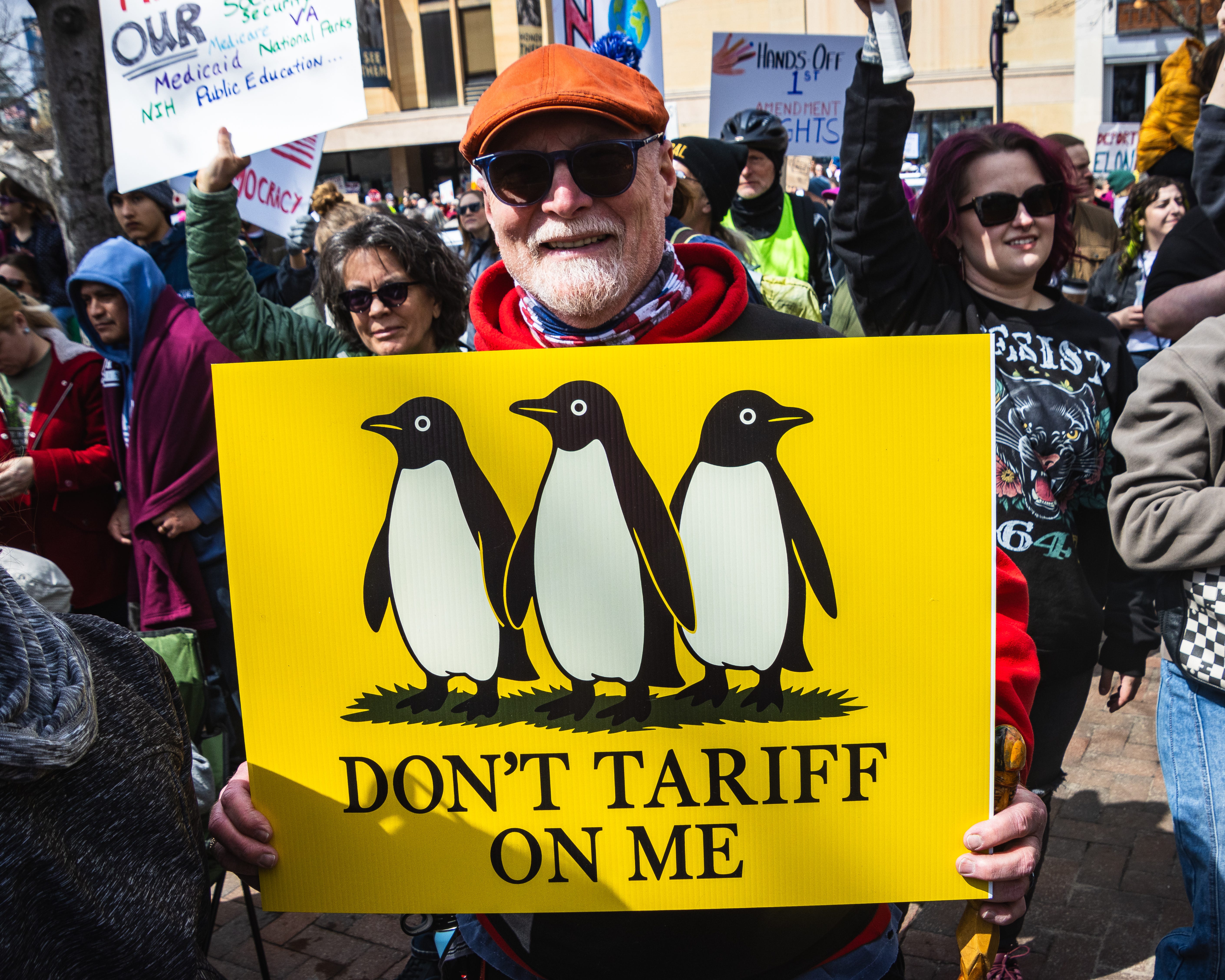
The Supreme Court has spoken: the President of the United States does not have the authority to unilaterally impose tariffs. After months of deliberation, on February 20, the Supreme Court issued its decision in Learning Resources, Inc. v. Trump. The question up for debate was whether the International Emergency Economic Powers Act (IEEPA) authorizes the President to impose tariffs.
The verdict? No. In a 6-3 ruling, the Supreme Court determined that the President’s authority under the IEEPA to “regulate…importation,” does not give the President authority to issue tariffs, including those Trump imposed, which were “unbounded in scope, amount, and duration.”
The logic is pretty straightforward: tariffs are taxes on American businesses and consumers, and the authority to levy taxes and duties rests solely with Congress. While it’s good news for believers in the Constitution and the principle of the separation of powers, let’s also remember: The Supreme Court’s decision does not change the fact that this administration’s tariff regime, however unlawful, has already caused real damage for the American people.
Here at Home of the Brave, we’ve been collecting stories from real people who have been hurt by Trump’s tariffs. For many of them, the SCOTUS ruling was too little, too late. While Trump flails, lashes out, and tries to get around the ruling, these Americans continue to suffer. We should listen to what they have to say, because this administration certainly hasn’t.

Kim, Customs Broker
Kim is a licensed customs broker, which means she handles the paperwork that moves imported goods through the American customs system. She sees, in detail and up close, exactly how tariffs work. And she wants people to understand something fundamental: No foreign government writes a check for these tariffs. American importers pay them directly to the Department of Treasury. That is not a political argument. That is the literal mechanics of the process she administers every day.
What’s pushing her clients—mostly small businesses—toward the edge isn’t just the cost of tariffs. It’s the speed and unpredictability of the changes. Importers plan 60 to 120 days in advance. They need to know what something will cost before they order it. Under previous administrations, tariff changes went through Congress, were published in the federal register, and came with 90 days to adjust. Now policy shifts within 30-day windows with no warning and no runway.
Kim has sent clients invoices showing $75,000 in customs fees. Those clients then have to choose: pay the tariff, or keep their employees. Most will let people go. Some may not survive as businesses at all. Kim doesn’t know if her own firm will be intact in six months.
Julie, Small Business Owner
Julie and her husband own a guitar effects pedal company, which they built in Akron, OH. When they started, they made a deliberate choice to manufacture locally, even though it would have been cheaper and easier to go overseas. Akron had been gutted by deindustrialization, and Julie wanted to be part of rebuilding it by offering good jobs, steady wages, and benefits to her employees. That choice cost them more from the beginning. But they cared about their community, so they stayed local anyway.
Their products require around one thousand components sourced from roughly 15 countries. Since April and so-called Liberation Day, Julie’s company has paid more than $60,000 in tariffs. While it’s too early to say how the new tariffs will impact Julie’s business, the unpredictability of this administration’s policies makes planning ahead nearly impossible. Their cost of goods sold has increased by 30 percent. They need to raise prices, but their sales have already slowed because of the broader trade war. They’re afraid to hire new employees because they can’t predict what the next year looks like.
Julie built something real in a city that needed it. These policies are making her business harder to sustain.
Chance, Truck Driver
Chance is a truck driver from Mississippi, and he voted for Donald Trump in 2016, 2020, and 2024. He’s a committed conservative who believes in free markets and low taxes. Chance supported Trump through his first term, but now he says he feels betrayed and let down.
Working in the interior of the country, Chance has seen how what’s happening at coastal ports ripples throughout the country. Intermodal drivers—the ones who haul shipping containers from ships to inland facilities—are now finding those ships arriving empty. The volume of empty vessels entering American ports is the highest it’s been since the peak of the COVID pandemic, he says. Those drivers still need to make a living, so they’re coming inland and competing for the same freight Chance depends on. More competition for less freight means lower earnings for truck drivers like Chance.
He has also seen the tariffs affect other aspects of his life. A friend tried to buy a $200 dress online and ended up facing $500 in combined shipping and tariff costs—$700 total for a dress that should have cost $200. His nephew Rowan depends on baby formula that has gone from $50 to $100. These are the real prices of the trade war, paid by real people Chance knows and loves.
As a small-government conservative, Chance keeps returning to the same contradiction: a tariff is a tax. A steep, regressive one. He cannot understand how a Republican Party that built its identity around cutting taxes has embraced what amounts to a massive tax hike on imported goods. He’s not looking to fight with anyone. He just wants someone to explain the tariff policy to him in a way that makes sense. So far, no one has.
What happens next is unclear. Tariffs that this administration have imposed that did not fall under IEEPA will likely remain in place. And Trump, after expressing his disdain for the Court’s decision, quickly instituted a new global tariff of 10 percent, which will last for 150 days unless Congress votes to extend them. We anticipate that he will do everything he can to reimpose the tariffs “unbounded in scope, amount, and duration” that the Supreme Court found unlawful through new avenues.
Still, the Supreme Court has spoken and made clear that the checks and balances of our Constitution still remain, at least when it comes to tariffs. While this is a positive development, it’s not the whole story.
Many people have suffered—and are still suffering—because of this administration’s tariff policies. Let’s not forget their stories.
Home of the Brave is an initiative dedicated to exposing this administration’s corruption, cruelty, and lawlessness.
Why can't Trump's supporters grasp how BAD tariffs are for American business? Are they hopelessly incurious? The phrase willful ignorance comes to the forefront. Trump himself is incapable of admitting he can be wrong - are his supporters too proud to admit they made a terrible mistake?
Tariffs killed my business. I've lost count of the number of times I've heard the casual remark "The tariffs are working and I have no problem with them as a policy." Idiots who have no clue how things really work. (Screaming into my pillow again.)