


Editor’s Note: This is part two in a series making the comprehensive case that Secretary Pete Hegseth is deficient as a leader, and that his actions undermine the culture and effectiveness of the Armed Forces. Part one addressed Hegseth’s personal conduct, and can be read here.

Here are three recent and disturbing data points coming out of this Pentagon: First, US Army Secretary Dan Driscoll resigned after months of conflict with Pete Hegseth. Second, the Pentagon has reportedly hired a slew of unqualified, partisan internet trolls as special government employees. Third, the USS Abraham Lincoln has become emblematic of the tragic consequences resulting from asking too much of our service members while providing them with too little support.
That is the state of our Defense Department today under the current leadership, and it is a sorry state of affairs.
George Washington said, “Discipline is the soul of an army.” In this, he was not simply talking about rigid obedience to a set of rules, but about living consistently and congruently with the principles and practices that ensure success in life and on the battlefield. In other words, that which gives life, breath, and vitality to the armed forces is adherence to the military culture. On the other hand, negligence and permissiveness result in apathy and weakness. In Hegseth, disguised as valor, there is a blatant disregard for the ethical culture and climate of the armed forces.
What do we mean by culture, ethical culture, and ethical climate? Edgar Schein defined “culture” as, “(a) a pattern of basic assumptions, (b) invented, discovered, or developed by a given group, (c) as it learns to cope with its problems of external adaptation and internal integration, (d) that has worked well enough to be considered valid and, therefore (e) is to be taught to new members as the (f) correct way to perceive, think, and feel in relation to those problems.” In other words, culture consists of the learned behavior patterns, reinforced among the members, that enable an organization to fulfill its mission. Simply put, it is the “way we get things done around here.”
Ethical climate is the shared understanding among members of ethically correct behavior. It clarifies the primary expectation for ethical action (self-interest, care for others, or rules/principle) and prioritizes interests (their own, the group’s, or an outside standard like the law). Ethical culture is the foundation—the values, norms, symbols, and leadership behaviors—that produce and reinforce the climate over time. Climate is the surface reading (what people currently perceive). Culture is the underlying system generating it.
The Ethical Climate of the US Military
Several studies of national militaries indicate a pattern of ethical culture consisting of four or five empirical factors (rules/law, caring, independence, self-interest/instrumental, and sometimes efficiency). A recurring finding is that a stronger “caring” or “rules” climate, especially when reinforced by ethical supervisors, predicts less misconduct and more resistance to unlawful orders. The U.S. military’s typical ethical climate profile is dominated by law and rules and caring, with independence and instrumental/self-interest climates present but less dominant, consistent with an institution built around codified standards (UCMJ, Law of Armed Conflict, core values) and unit cohesion.
Since January 2025, under Hegseth the US military has experienced climate change. First, there has been a shift from an emphasis on principle/law toward instrumental/self-interest and loyalty-as-principle. Secretary Hegseth fired the Army, Navy, and Air Force’s top uniformed lawyers (TJAGs) in his first weeks, without explanation, and later moved his own former personal attorney into a role overseeing a “ruthless” overhaul of the JAG Corps. Hegseth said the law and lawyers should have little influence over the military and its operations and does not want lawyers who act as “roadblocks” to command decisions. Eleven senators on the Armed Services Committee wrote that the firings signal to the JAG Corps that positions depend on political or personal loyalty rather than legal expertise.
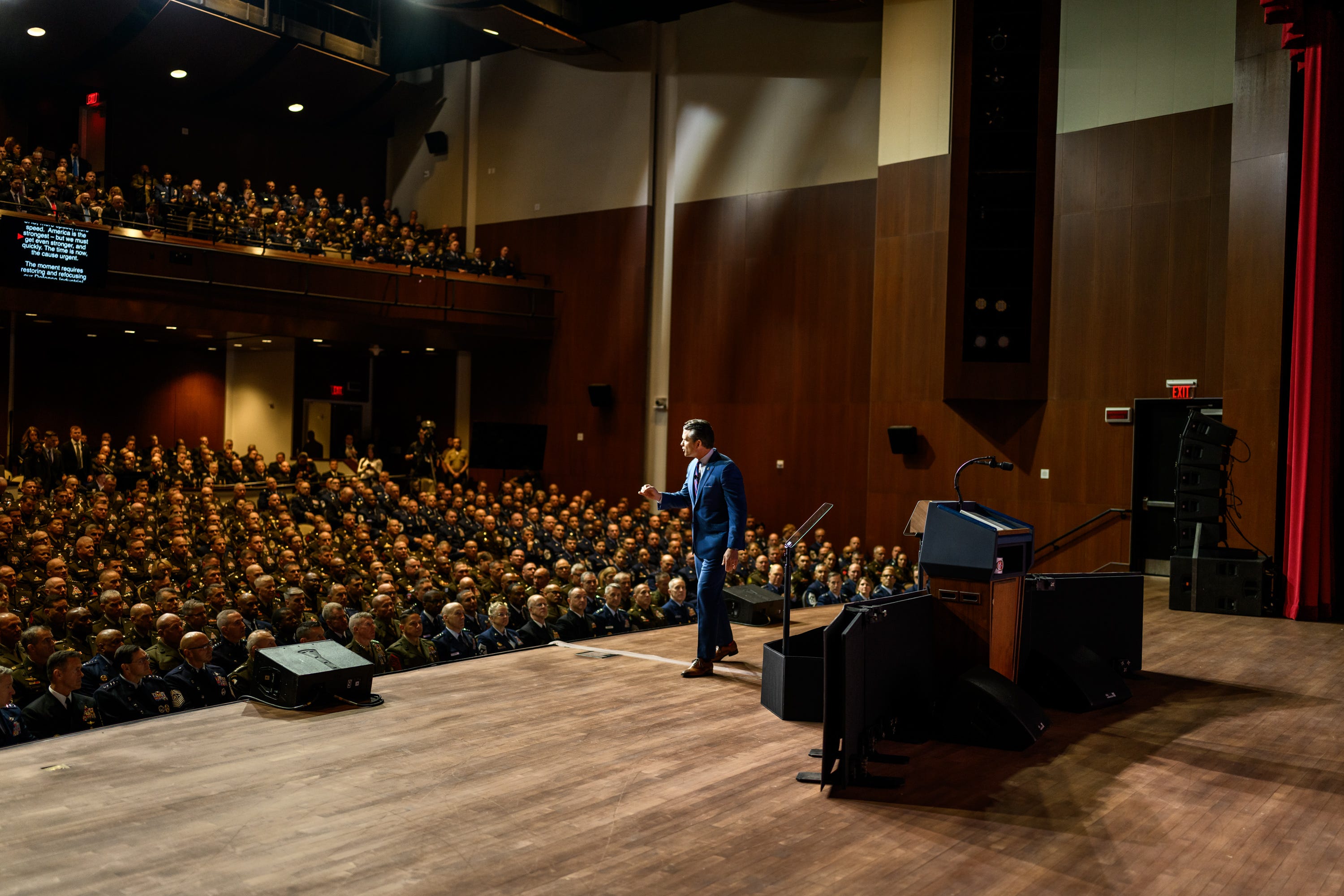
Second, the emphasis on rules/law-and-code climate is increasingly under pressure from a “warrior ethos” reframing. At a mandatory gathering of hundreds of flag officers, Hegseth announced directives explicitly repositioning the culture away from what he called “woke garbage” and toward a “warrior ethos,” eliminating identity months, DEI offices, and related programs. The Warrior Ethos, the formal statement embedded in the Soldier’s Creed, states, “I will always place the mission first, I will never accept defeat, I will never quit, and I will never leave a fallen comrade.” It codifies the commitment of soldier-to-mission and soldier-to-comrade and operationalizes the ethics of duty and caring.
However, Hegseth has co-opted and reframed the warrior ethos to mean nothing more than ruthless, dispassionate lethality. Supporters see this as restoring the proper focus, since, according to them, the laws of armed conflict, rules of engagement, and DEI initiatives have hindered lethality. Critics, including legal analysts, argue the JAG firings in particular were meant to set a command climate favoring a more permissive interpretation of the laws of war.
In another clear example, Hegseth acted to reduce protections for civilians on the battlefield. He has not fully funded nor staffed the Civilian Protection Center of Excellence mandated by Congress in 2022. A DOD Inspector General report found that the Civilian Harm Mitigation and Response Action Plan (CHMR-AP) has not been implemented. The CHMR-AP involves embedding protection specialists in the targeting process to mitigate civilian casualties according to US and international law. Senior military leaders supported this plan as fulfilling the moral obligation to protect civilians and ensuring accurate targeting. Hegseth is unable or unwilling to see the benefits to the forces of having guardrails against illegal, unethical, and immoral actions. Benefits include maintaining moral legitimacy, preventing moral injury, and avoiding actions that would provide incentives for recruiting new terrorists.
Third, the emphasis on independent professional and legal judgment has been eroded. Multiple former JAGs and legal scholars argue the changes remove the independent check commanders have relied on before executing questionable orders. Without independent military lawyers, commanders’ recourse becomes comply or resign. Overwhelmingly, experts and scholars agree that the attacks on alleged drug smugglers in the Caribbean and Eastern Pacific are illegal and constitute extrajudicial killings of noncombatants. The Trump administration’s characterization of a “non-international armed conflict” with unspecified gangs and drug cartels gives the impression of politicized legal guidance. The targeting of shipwrecked suspected drug traffickers with a second attack is clearly a violation of international law. Also, the DEA has found that these strikes have not reduced drug smuggling into the US. In addition to legal judgment, he has marginalized medical expertise (testosterone testing, flu shots, and beards) and chaplain religious expertise (displaying rank on uniforms and reducing/consolidating recognized faith groups).
Fourth, self-interest and loyalty have replaced merit-based performance evaluations in promotions and assignments of senior leaders. Hegseth has enacted in a well-documented, widespread purge of dozens of senior military leaders, including the Army Chief of Staff, Gen. Randy George, leaving the DOD with a void of strategic leadership expertise and experience. Hegseth suspected Gen. George—who was supposed to be mediating an ongoing dispute between Hegseth and Secretary of the Army Dan Driscoll, who, as noted, also recently resigned—of leaking information about it. Hegseth fired him without prior notice while Driscoll was on vacation. Hegseth also fired several of Driscoll’s top advisers in what officials characterized as an effort to undermine the Army Secretary’s influence.
The Ethical Culture of the US Military
Since culture drives climate, in what ways is Hegseth facilitating change? One model of ethical culture consists of seven criteria: clarity, congruency, feasibility, supportability, transparency, discussability, and sanctionability (accountability). Clarity means there are clear expectations of what it means to be a member of the Armed Forces and the meaning of acceptable, ethical behavior. Hegseth’s actions and rhetoric are sending mixed messages and creating confusion about expected behavior. In Iran, the US is engaged in what has been described as a whiplash war. In the three months of the war, he has provided three conflicting positions on the supply of munitions, first stating that there was a full supply; then, in April stating resupply would take months or years; then in June stating on Face the Nation that “our stockpiles are great, and they’re only getting stronger” while submitting a $1.5 trillion budget request.
Congruency means leadership behavior, policies, and decisions are consistent with the law, the Code, and the values of the military. The most influential mechanism for shaping culture is the example modeled by the leaders. Throughout this essay, there are examples of Hegseth’s behavior inconsistent with the core values of the Armed Forces. At a congressional hearing, Hegseth’s account of a battlefield incident directly conflicted with statements from surviving soldiers, who told CBS that his version was false and that their position had been essentially undefended. When Rep. Pat Ryan pressed him on the discrepancy, Hegseth did not directly answer and instead dodged the questioning itself.
Feasibility means that the leaders provide the resources necessary for the members to engage in ethical conduct. By firing JAGs and eliminating programs that support DEI, he has reduced access to resources commanders and service members need for guidance and redress. Due to the extended military operation, the US has depleted its supply of Patriot interceptors. On August 1, the commanding general of European Command, notified the Pentagon that he did not have sufficient resources to defend Israel.
Supportability means the leaders of the organization provide physical, mental, and emotional support for the members in the accomplishment of the mission and vision. In December 2025, Hegseth eliminated the Army’s Spiritual Fitness Guide, criticizing it for an absence of an emphasis on God and promoting New Age ideology, such as, “the soldier’s spirit consists of consciousness, creativity, and connection.” This statement shows his ignorance about the common themes of spiritual resilience among various faith groups.
In June, he ordered the removal of rank from display on chaplains’ uniforms, a move that symbolizes marginalizing the chaplain’s role as trusted advisor to the chain of command. In the area of mental health, the DOD released its annual suicide prevention report, which included progress on implementing the “enabling actions” recommended by the Suicide Prevention and Response Independent Review Committee, established by Congress in 2022. The committee’s final report included 127 recommendations. As of November 2025, the DOD had implemented 27 actions, mostly in the “Foster a Supportive Environment” line of effort, completed one of 19 actions in revising suicide prevention training, and completed two of 18 recommendations for addressing barriers to receiving care, such as the stigma of seeking help.
Hegseth has not provided open, honest, transparent communication regarding the activities and performance of the organization. He has not been forthright in communicating the extent of those injured in the war on Iran. Family members have accused him of downplaying the extent of injuries. Also, in September 2025, he enacted a policy requiring media outlets to commit to not reporting information on military operations that was not explicitly and officially authorized in an attempt to limit journalistic freedom. The New York Times sued and in March 2026, the judge ruled the policy unconstitutional and ordered the reinstatement of journalists’ credentials. Within three weeks, the judge subsequently ruled the Pentagon in violation of his original ruling.
An ethical culture provides a safe space for people to discuss difficult issues with respect and empathy and the freedom to dissent. A core element of the military culture is candor. He has suppressed any dissent that does not align with the administration’s political perspective.
When members violate the standards and expectations of conduct and participation they are confronted and held to account with dignity and respect (sanctionability). A primary culture forming mechanism is the criteria and manner in which leaders reprimand misconduct. He reversed disciplinary action and stopped investigations involving misconduct and unsafe actions. At the same time, he initiated an investigation of Sen. Mark Kelly, following the senator’s appearance in a video with other elected officials that reminded service members of their obligation not to follow illegal orders.
A clear, well-documented case that demonstrates climate change and how elements of culture shape individual behavior is that of current Chief of Naval Operations (CNO), Adm. Daryl Caudle. Soon after Hegseth was nominated, Caudle offered to help him prepare for his confirmation hearing, which was expected to be highly contentious. This offer was a breach of the apolitical norm of the professional military ethic. Soon after Hegseth became Secretary of Defense, in February 2025 without explanation he fired Adm. Lisa Franchetti, the first woman to serve as a service chief, CNO, and on the Joint Chiefs of Staff. Shortly thereafter, a senior officer on Caudle’s staff communicated with Hegseth’s staff, recommending Caudle as CNO.
In this second breach of ethics, the senior officer described Caudle as ideologically aligned with Hegseth, using such terminology as “no one more in line” with Hegseth’s vision, a “warfighter” who wanted to remove “woke barriers” supposedly weakening the force. Simultaneously, the Department of the Navy inspector general was conducting an investigation of Caudle regarding statements he made to sailors about the Sexual Assault Prevention and Response program needing to do more to prepare sailors to avoid situations conducive to assault. The sailors took his comments to imply that he was blaming the victims.
These three incidents signaled to Hegseth that Caudle was supportive of his ideology and would be loyal. After Franchetti was fired, the acting Secretary of the Navy convened a meeting of senior leaders to identify candidates for the CNO position. When the top three candidates were identified and Caudle’s name was not listed, Hegseth responded, “Where’s Caudle?” Although he was not considered to be among the best qualified for the position, Hegseth selected him. Sean Parnell, the chief DOD spokesman, said that Hegseth “interviewed many candidates for the position and ultimately found Adm. Caudle to be the right fit.” The description of “the right fit” seems to be a reference to ideology and politics as selection criteria rather than qualifications and merit, and indicates a significant shift in ethical climate. Since the criteria for selection and promotion is a significant mechanism for shaping ethical climate and culture, without a doubt other officers will take note and pursue a similar pathway.
Pete Hegseth is transforming the ethical climate and culture of the military, and not beneficially. His actions are shifting the operative ethical criterion from principle/law toward loyalty and self-interest. Determining those who are rewarded is now tied to political alignment rather than legal or professional standards. He is weakening the independent climate that historically constrained unlawful orders. If a strong climate of principle/law and caring reinforced by ethical leaders deters misconduct and provides resistance to unlawful orders, then the transformation by Hegseth will result in increased misconduct and the adherence to unlawful orders.
As mentioned in part one of this essay, the essence of leadership is trust. Troops must trust their leaders to model ethical norms and not to order illegal, unethical, or immoral actions. Leaders must trust their troops not to engage in such actions. Citizens must be able to trust the members of the military to provide for their defense in ways consistent with national values, ethical standards, and the law. Hegseth’s transformation of the ethical climate and culture of the military is in reality an erosion of trust. When there is no trust, there is no security and there is no peace.

Can the military court-martial Hegseth? Oh yeah, that is why one of his first moves was to fire the top JAG officers. It was a transparently pre-meditative move to allow him to order WAR CRIMES with impunity. Impeachment proceedings against Hegseth should have begun about the time of the first strikes and double-tap murders on civilian boats off the coast of Venezuela. Of course, Trump likes the bloodlust and pirate mentality with no legal guardrails. In Trump 1.0, Miles Taylor recounted how the "adults in the room" told Trump that he could not just "shoot demonstrators in the legs". I hold the majority of Congressional Republicans fully responsible for letting Hegseth and Trump denigrate and misuse our military in order to engage in bloodsport for the sake of their maladjusted adolescent ego-gratification. Congress has the power to stop the illegal Iranian War through the War Powers Act as well as impeach Hegseth. Not only is the American voting public looking at the Repugnant Party with disgust, but so is the entire world.
A disciplined military with good leadership and high morale is a deterrent to Trump's plans of dictatorship. This is why I believe he hired Pickled Pete: To rid the branches of the strong leaders and kill the morale of the rank-and-file. Thus disheartened, they would then be more likely to go along with Trump's plans to declare himself President-For-Life!