


By Tara Fannon
Do I spend money figuring out why my arms and legs keep breaking out in itchy welts? Do I finally investigate the hip pain that’s been nagging me for months? Do I splash out on the ultrasound that my doctor ordered? Do I restart therapy? I can’t do it all. The world keeps spinning while I’m trying to convince recruiters and managers that I’m worth a shot. It’s not how I imagined life one year after losing my job—or life at all, really.
None of this is an accident. I didn’t lose my job as a government contractor, or face everything that came after, because of anything I did wrong. Elon Musk—Trump’s largest political donor and the world’s richest man, with no meaningful experience in government—was granted extraordinary authority as a “special government employee.” With that authority, he simply decided that the federal contracts my colleagues and I were servicing were expendable. And just like that, our positions and many others were eliminated.
I knew finding another full-time position would be a challenge. I was entering a job market unlike anything I’d experienced before. The Trump administration’s decisions triggered a cascade of layoffs across sectors and industries, displacing highly qualified workers whose jobs were tied directly or indirectly to federal funding, contracts, and programs. The market was, and continues to be, overflowing with highly qualified talent applying for a shrinking number of open jobs.
I had no idea that I’d still be looking for full-time work over a year after being laid off.
In this market, positions disappear without explanation. Hours are spent tailoring resumes, writing cover letters, networking, interviewing, following up, hearing nothing or making it through multiple rounds to learn the position has been put on hold, canceled, or filled internally. Career coaches have advice: Network. Build your personal brand. Optimize your LinkedIn. Keep your chin up. Stay the course. You only need one yes. And my favorite, treat finding a job like a full-time job. Every email could be an interview request or another rejection. I wonder how much longer I can keep doing this. I worry about what I’ll do if my “yes” doesn’t come soon.
Meanwhile, my body doesn’t care that I’m unemployed, and the job search itself becomes a source of declining health. As most know, when you lose a full-time job, you also likely lose your health insurance. COBRA exists, but at those inflated prices it might as well not. So, like so many unemployed people, I had to purchase marketplace insurance last year because it was the only option. Let me be clear. I’m mostly insured on paper. I chose the “cheapest” plan that allowed me to keep some but not all of my doctors. Last year, that plan cost just over $400 a month. In January, it increased to $805. Copays and other out-of-pocket costs also went up, and fewer services are covered. Two of my doctors have since stopped taking my plan, and my insurance company apparently is petitioning to increase my premium by another 12%.
I’ve gone from paying more for insurance and thinking twice about using it, to wondering if I should drop it altogether. Every ache, symptom, or side effect comes with a potential price tag, and every decision to address it has become a calculation. Can I afford the specialist? Can I also afford the lab work that the specialist orders? Can I afford the follow-up appointment to discuss the lab work? Can I afford the imaging the follow-up appointment recommends? Can I afford not to? I catch myself ranking my medical problems. Maybe the hip can wait. Maybe the rash will resolve on its own. Maybe I don’t need the ultrasound after all. Maybe, maybe, maybe.
And no one seems to know how things work in our health care system.
“We don’t handle that.”
“Check with your insurance provider.”
“The doctor’s office needs to give you that answer.”
“Talk to the lab about that.”
I’ve spent hours on the phone trying to understand what’s covered, who’s in network, whether I need a referral, and what the next appointment will actually cost me. Sometimes the answers change depending on who answers the phone.
Navigating our health care system (just like navigating the current job market) is an unpaid job. And I get it; when I had employer-sponsored health care I still had to navigate this unnecessarily complicated system, but somehow the frustrations were offset by the knowledge that in the end I’d be able to access and afford the care I needed.
People talk about unemployment as if it’s just a financial problem. It’s not. It’s also a health problem. It’s a mental health problem. The physical toll is obvious. The mental toll sneaks up. It shows up as sleepless nights, racing thoughts, elevated blood pressure, a nervous system stuck in fight or flight. Eventually, your health starts to slip away, not always because you’re sick but because staying healthy is prohibitively expensive—in one of the wealthiest, most medically advanced countries in the world, I might add.
WATCH—“I feel like I’m doing everything I can, and it’s still not enough.” Tara’s story in her own words:
Despite famously claiming to have “concepts of a plan“ to replace the Affordable Care Act (ACA) with something better, a promise I never believed would materialize, Trump has done nothing to expand health insurance coverage. Quite the contrary; the administration’s One Big Beautiful Bill cuts billions in health care funding, a move that is projected to leave millions of Americans without insurance, while offering no comprehensive alternative to the ACA.
The effects are widespread. Provisions in the bill affect Medicaid, Medicare, and ACA marketplace plans in a variety of ways (e.g., higher premiums and out-of-pocket costs, fewer covered services and participating providers, hospital closures that will lead to health care deserts, and rising prescription drug costs). Even people with employer-sponsored insurance are likely to feel the downstream consequences through higher costs, reduced capacity, and increased strain on the health care system.
Losing a job doesn’t just mean losing a paycheck. It means losing the ability to solve health problems before they become emergencies. It’s how people end up living with chronic pain and illness, ignoring symptoms, going into debt, and hoping things don’t get worse than they already are. The irony is that unemployment is exactly one of those times when you need access to affordable health care the most.
Until you’ve lived through long-term unemployment, it’s hard to understand how every system in our country seems to assume you’ll be back on your feet in a few months. What if you’re not? What if you do everything you’re supposed to do and life still doesn’t cooperate? What if you’re not deciding between luxuries, but between legitimate medical concerns, knowing you can only afford to address one, maybe two? That’s where I find myself today.
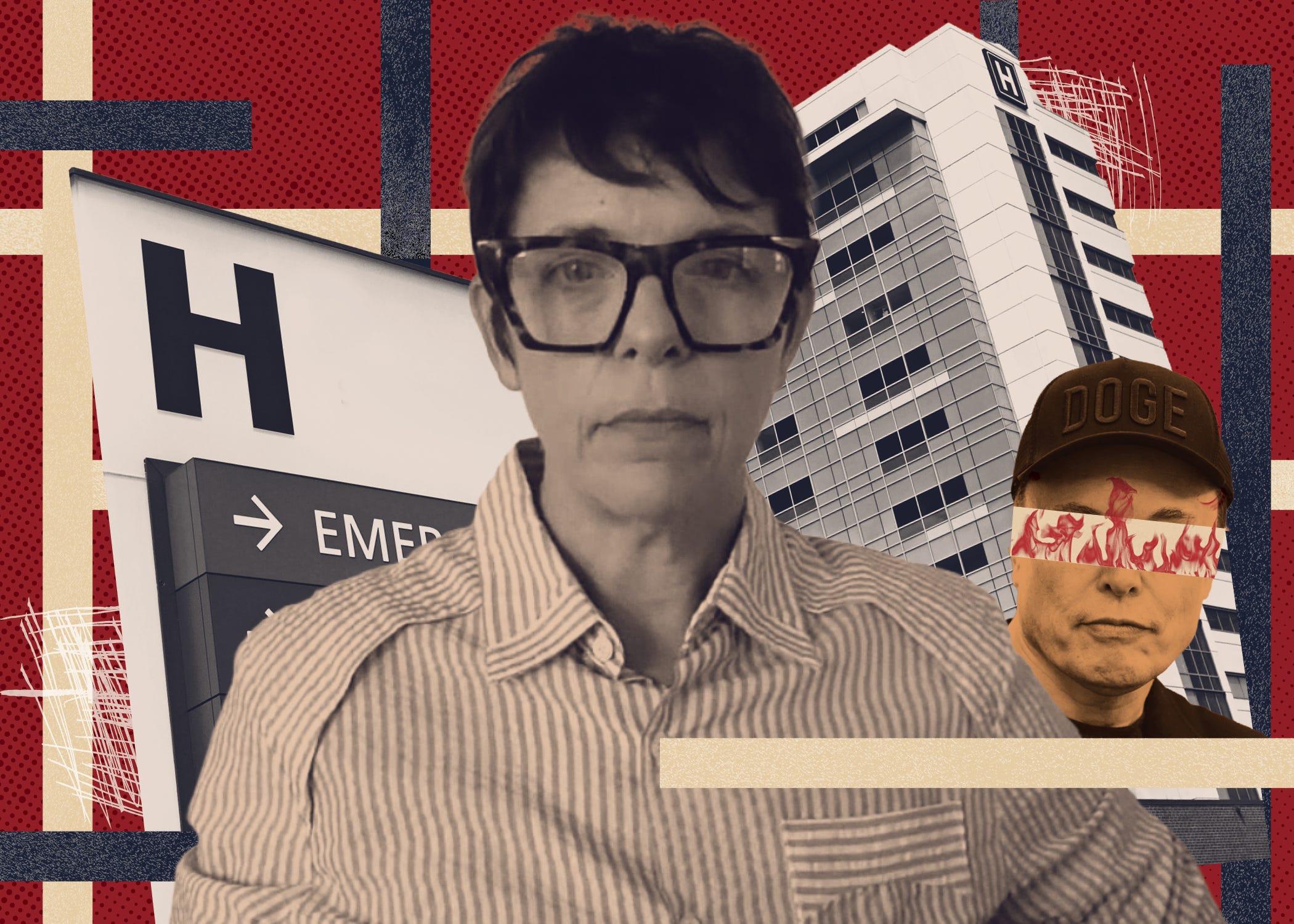
Tara Fannon, a former government contractor and research director, was laid off after DOGE canceled most of her company’s contracts, leading to mass layoffs.
I hear you, Tara. I find that people who have been lucky enough to remain employed through these turbulent years don't fully grasp how the combination of mass layoffs across sectors, a shrinking pool of white-collar jobs, and a hiring bias against age and experience have all come together in a perfect storm. Nothing, not the dot com crash nor the 2008 economic crisis nor the Covid crisis prepared me and so many peers for long-term unemployment, rationing medical care, and the frustration of having done everything "right" - in terms of education and career, only to be sidelined in our peak earning years. You speak for not hundreds, but thousands of people who are trying to navigate this new territory.
It's the new Trump economy. Homelessness, unemployment, and poverty, while the privileged have easy sailing, enjoying their tax loopholes and extra benefits.