


By Thomas W. Schaller
Parallels between governmental power and cultural aesthetics are nothing new. The cornerstone of the ancient Greeks’ way of life was the belief that beauty and social order were inextricable. They equated moral superiority with beauty in all forms, including the physical, and as expressed by painting, architecture, mathematics, literature, music, philosophy, and spirituality. The quest for social order was a quest for excellence as expressed by symmetry, balance, and moderation.
Centuries later, the conquering Romans, while heavily influenced by the Greeks, focused their aesthetics more upon a celebration of ancestry, and imperial, iron-fisted power. The expression of this focus was seen everywhere, but perhaps nowhere more clearly than in the opulence and grandeur of their public architecture. These structures were meant to overwhelm and to impress, exacerbating—among other things—the gulf between the ruling elite and the mere mortals under their control.
Understanding the birth of a purely American aesthetic is an elusive thing. We are a relatively young country, having only a few hundred years of history upon which to draw. The Founders were a diverse group of men, but it is fair to say that to one degree or another, they were all influenced by Greek and Roman writings, European precedent, and importantly, by the Enlightenment-era emphasis on reason, science, and individual liberty as essential components of a thriving society.
It is this emphasis upon personal freedom and egalitarianism that is the North Star of the American spirit. And while we have not always lived up to that promise, it is a literal and aspirational cornerstone of our Constitution. This anti-monarchical point of origin has formed the backbone of our ever-evolving American aesthetic.
In terms of architectural expression, early American design was a reflection of historic antecedents and stressed the importance of symmetry, balance, simplicity, and nobility. The Federal style that characterized most civic buildings in America from the late 1700s and early 1800s is dignified, refined, and seems intended to lift up, inspire, and to include. Its Neo-Classical vocabulary was influenced by the Greeks and early Romans and popularized throughout Europe, Britain, and America in part by Scottish architect Robert Adam. So many of our public buildings of that era are marked by their elegance, proportion, and lack of opulent ornamentation.
Public architecture has a unique ability to telegraph to the public the intentions of those in positions of authority. These early American designs often seem to offer hope, solidity, and comfort and to feel inclusive rather than forbidding. In many ways, this aesthetic proved perfect for a nascent country.
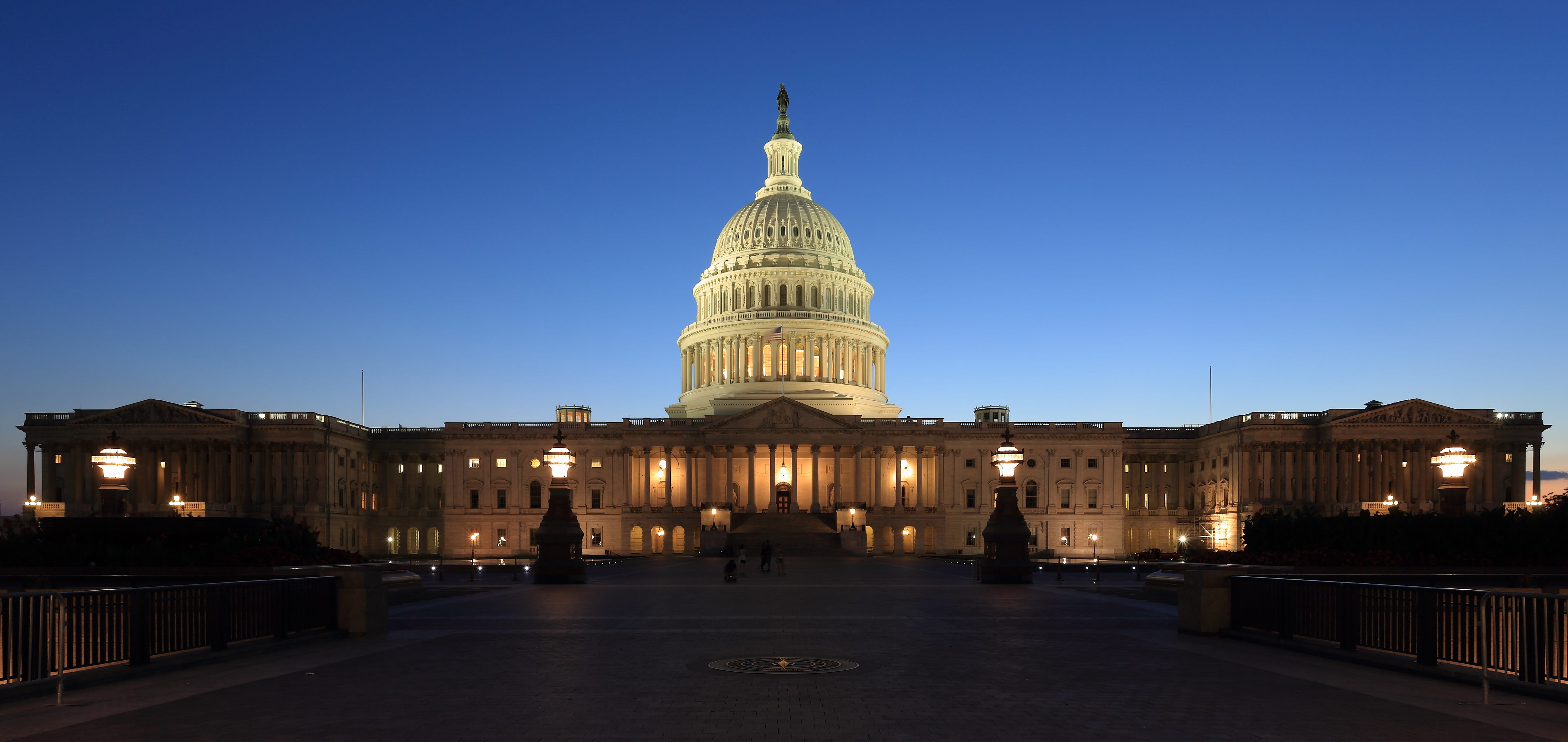
The more modern era has been no stranger to public buildings that reflect the nationalist aspirations of their respective governments, rather than the welfare of their populations. German, Russian, and Italian Fascist design of the 1930s had more in common with the emperors and monarchs of Imperial Rome and dynastic Europe, than the more egalitarian or utopian ideals of emerging modernist ideas at the time.
Today, there is the perennial clash between those who look back to classical precedent for the design of civic buildings and those who wish to look to the future. In many ways, modernism seems ideal for a young, forward-looking country, but it has not always been understood or well-received. Likely, this is because the forms of classical design are more easily grasped, while modernist forms can be experimental and unprecedented. But timeless examples of civic buildings by modernist architects abound.
The National Gallery of Art by I.M. Pei, The Salk Institute by Louis Kahn, The Holocaust History Museum by Moshe Safdie, Corbusier’s work on the United Nations complex, Zaha Hadid’s Jinwan Civic Art Center, Boston City Hall by Kallmann, Mickinnell & Knowles, and the Museum of African American History by David Adjaye are just a very few. And more recently, Polshek Partnership’s Clinton Presidential Library and The Obama Presidential Center by Todd Williams and Billie Tsien are examples of designers responding to the visions and aspirations of public service to create structures that strive to reach outward to the communities they have tried to serve. They are not monuments to a single individual.
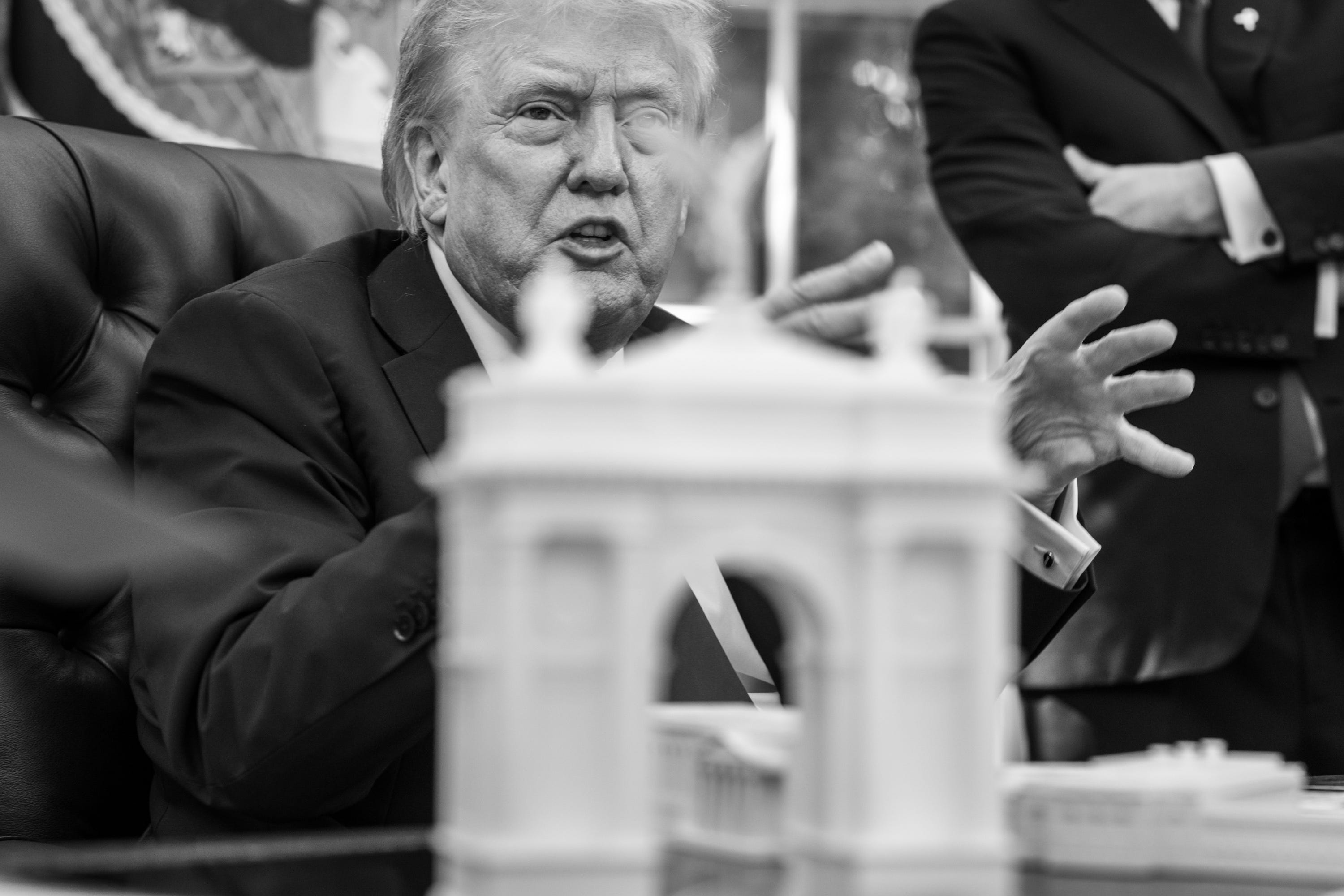
Things are very different in Washington today. President Donald Trump’s aesthetic, from his proposals for a grandiose ceremonial arch, a massive, gilded ballroom, a bookless presidential library, to the garish glazing of the Reflecting Pool, and the over-the-top gilding of the Oval Office all miss the mark. It is not by mistake that these efforts seem far more a product of a European monarch or a Roman Emperor. They are designed to celebrate the assumed power of one man, more than the country he was elected to serve. There is a saying that some people would rather ask for forgiveness than permission. But he asks for neither.
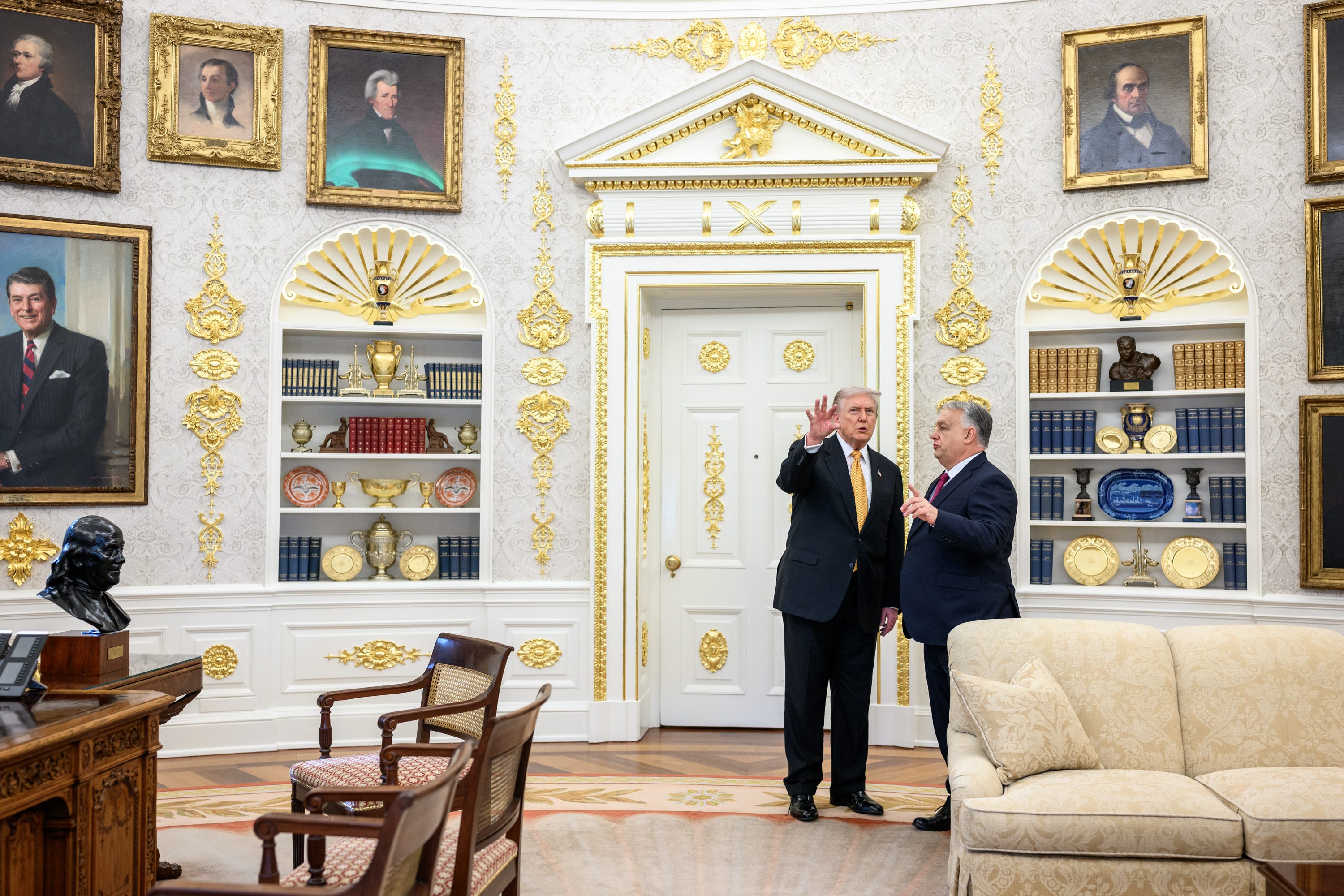
Like his military excursions into other countries, this is a man who seems to act out of a sense of personal entitlement. He is unbothered by the ethical or Constitutional requirement for consensus or procedure. When he decided to demolish the East Wing of the White House for example, and begin construction on a grandiose space that will be reserved only for the use by the most wealthy donors, he signaled that this is the kind of country he wishes the US to become. We are not obliged to agree. And he ignores the fact that this is not a decision for him to make. The White House belongs to us, not to him. He is but a temporary steward.
Fundamental to our American way of life and embedded in our Constitution is the fact that we are ruled by the will of the people, not by a monarch. To this end, the Founders gave the sole power of raising funds to the Congress, not to the president. It is all too easy to be offended by Trump’s personal taste. Yes, his penchant for gold and glitz and imperial scale offend many on a personal aesthetic level. But we can miss the fact that the offense is much deeper than simple taste. These are the actions of a man who has forgotten, or does not care, why and how, and for whom America was founded in the first place.
Thomas W. Schaller is an award-winning artist, architect, and author based in New York City. He is the recipient of the The Arthur Ross Award in Fine Arts 2024, by the Institute of Classical Architecture and Art, NYC. He also received the 2024 and 2025 Raphael Award, a Graham Foundation Grant, and is a two-time recipient of the Hugh Ferriss Memorial Prize. He has authored three books on art and architecture.
Thank you for your history lesson and analysis. I think we can say without hesitation that this regime is all about the worship of power, dominance, corruption and cruelty. The heinous remaking of everything Trump touches only demonstrates this idolatry in ugliness and tackiness.
The Presidency is dead. Long live the King. You nailed the issue, with this: 'These are the actions of a man who has forgotten, or does not care, why and how, and for whom America was founded in the first place.'
I grew up under apartheid in South Africa, and watched these same distortions of the perception under the guide of efficiency and progress. I protested along with others and eventually determined that peaceful protest accomplished nothing. Emigrate to Canada and now sit watching apartheid's resurrection in America. I decided not to run away again. Wrote a novel called 'The Kingdom of America.' This comment started with its subtitle. It's the story of an exiled South Africa, living in America with a false identity—yes, an illegal alien—who decides he can't watch the same evil playbook being implemented again. The actions he initiates are a political thriller, but the theme is violence, racism and authoritarianism. Perhaps, most importantly for America, its also about what happens to a country when the rule of law is suspended, and tyranny takes over. What do you do about it?