


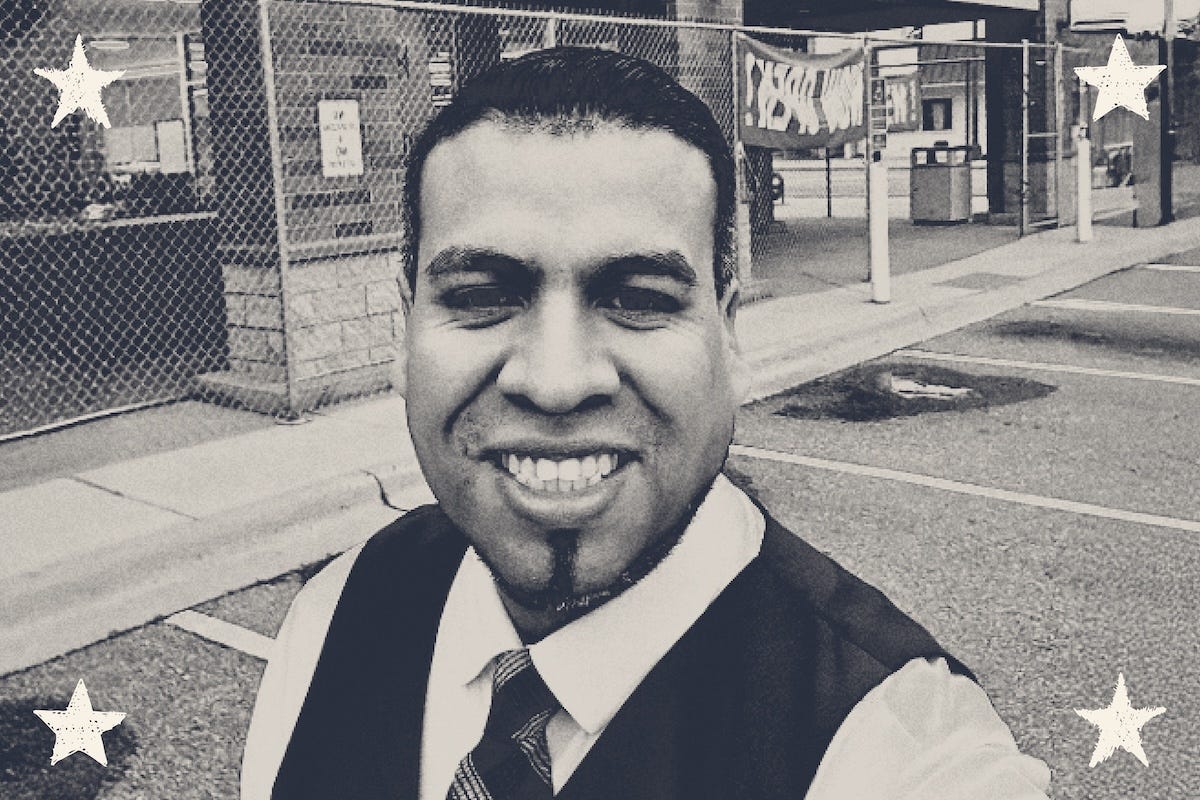
The Mexican revolutionary and freedom fighter Emiliano Zapata has a very famous quote, and one that’s especially resonant in this authoritarian moment here in the US: “Mejor morir de pie que vivir arrodillado.” It means: “It is better to die on your feet than to live on your knees.” It’s something Daniel Hernandez finds himself thinking about a lot these days.
He’s lived in Minnesota for 25 years, owns a supermarket and restaurant, and is a DACA recipient. He came to Minnesota to work and do the best he could for his family and community. He is one of many. And recently, even though his business is suffering, he has been offering housing to his employees, delivering free groceries to people in need, raising money to support local businesses, and helping parents fill out Delegation of Parental Authority (DOPA) forms to protect their children.
Daniel is clear-eyed about the fact that the situation in Minnesota over recent months has been worse than a war zone. Under ICE occupation, it seems like federal agents are operating under a policy of detain first, ask questions later.
Daniel has been open about how this immigration policy has affected his business and the community it serves. He used to sell about a million dollars’ worth of inventory per month. Now he only sells $125,000. He used to employ 70 people. Now he only has 12. He says he’s going to stay open as long as he can, and the owner of the building has already waived his rent for three months. But without the income his business normally generates, he has had to stop paying himself. He wonders: How in the world am I going to survive?
Even within Daniel’s remaining employees and their families, there is suffering. Seven of his12 employees stay in the store to sleep at night. They are not able to see their kids. Not able to go home and have a better rest. Daniel wonders, as an employer: What should I do? Should I tell them, ‘You can’t stay here?’ Of course not. All he can do, he says, is just bring them blankets and pillows and try to make sure they’re comfortable. So that’s what he does.
But his business is not the only one struggling. Not long ago, when you came to his grocery store, you would find 12 individual businesses within it, operating like a marketplace. They sell clothing, shoes, jewelry, ice cream, you name it. And now? Eleven of the 12 are out of business. Literally shuttered. Daniel cannot even reach out to some of the business owners. They still have all their goods inside. He has tried to call them but their phones are disconnected. Their spouses’ phones are disconnected. Their kids’ phones are disconnected. He’s wondering: Are they still in Minnesota? Because I cannot find them.
This is just the story of Daniel’s business and the little plaza around his store. There are so many other places where this is happening. In Minneapolis, Lake Street is the artery of the Latino community—it’s where Latino-owned and -operated businesses thrive. Daniel guesses that a majority of these businesses are closed right now. The City of Minneapolis estimates that the recent ICE presence has been costing the city $20 million per week. Daniel’s afraid most businesses won’t be able to survive this.
Right now, people like Daniel’s employees aren’t leaving their homes, so he’s started offering free grocery delivery. When people don’t have money, the store finds ways to give them $150 worth of food for free. He’s also started working with a Minneapolis nonprofit called Nuestra Lucha to raise money to buy food from Latino businesses to feed struggling Latino families. Even though he knows his business might not survive, he says he also knows there are more important things.
The way ICE and CBP are indiscriminately rounding people up without due process—and literally killing Americans who peacefully stand in their way—is the root of all this chaos and pain. And Daniel thinks we will continue to see more harmful economic effects of this inhumane immigration policy. So many small businesses will simply not be able to return. This is the opposite of creating community; it’s a war being waged by masked federal agents on a peaceful community that was doing just fine until they showed up.
Daniel is angry right now, but he doesn’t let anger drive him. He is focused on what he can to support his community. He goes to different homes to help parents complete their DOPA forms in order to protect their kids in case the parents are detained. He makes videos every single day to share what’s happening. He doesn’t speak in anger. He believes that justice can overcome anger, can defeat injustice, can address hunger, and can help resolve the issues that our country is facing right now.
Why does he do this? He has three kids that depend on him, all of them under 18. Now, his kids always carry their passports with them, because they’re so afraid that they might be taken. There are so many others who, like Daniel, came to the US to work and build a better life for themselves, and build a stronger community. Many of them aren’t in a position to fight back right now. Daniel says simply: This is the least I can do to support them in return.
Home of the Brave exists to show Americans the real-world consequences of this administration’s policies, and to highlight what bravery looks like in defense of American democracy. Daniel can be supported through his GoFundMe.
A real American. He embodies what this country stands for.
Good for him. I hope others should do the same. It's a shame that 'America' is turning into a; 'Fascist Country'.