


By Prof. Lawrence O. Gostin
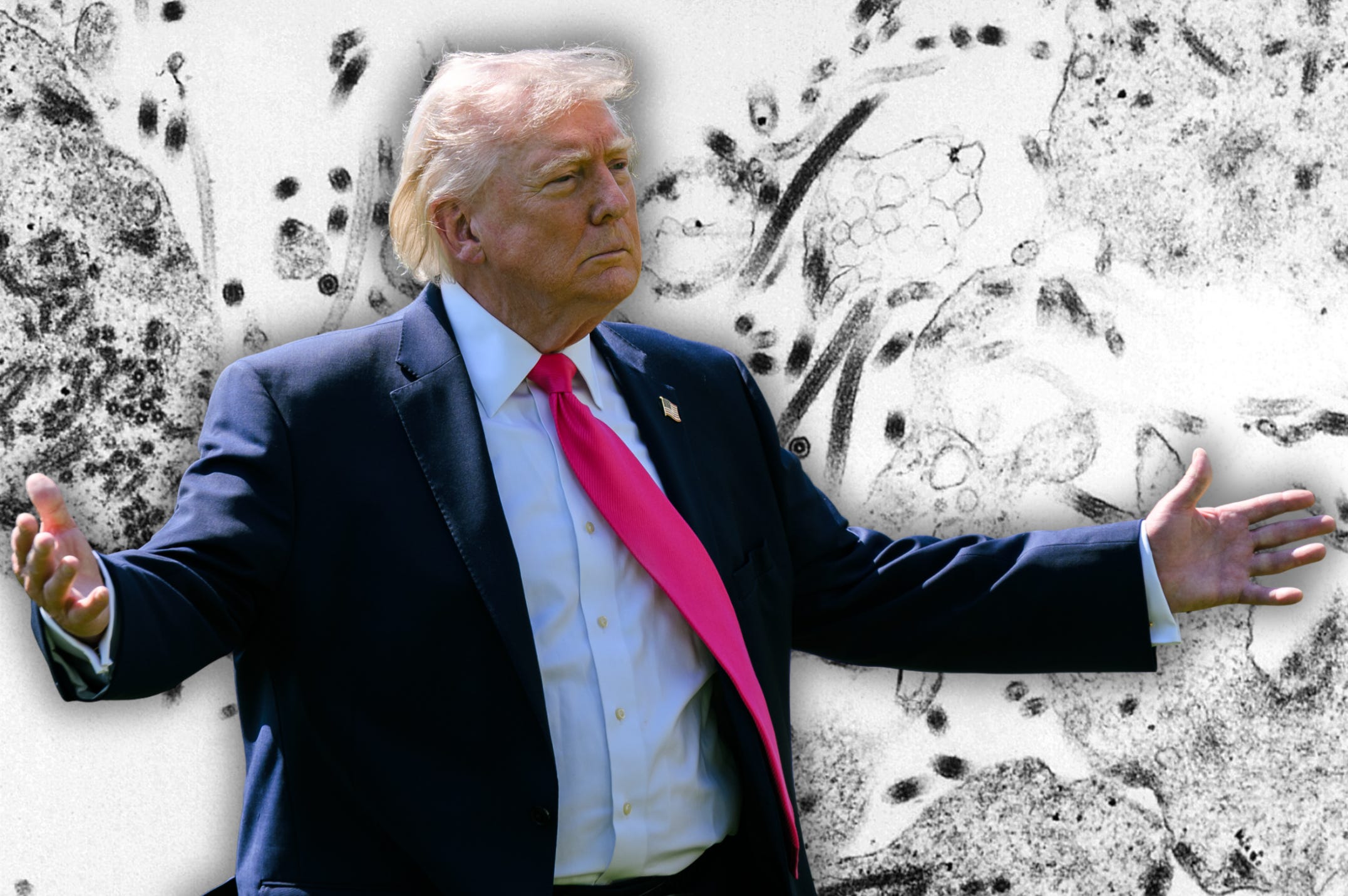
Right now the United States is choosing to stand on the sidelines, rather than take on a leadership role in confronting the ebola crisis. Instead of taking active measures informed by sound public health data, our government is banning travelers, including health and humanitarian workers returning from affected countries, while stranding vulnerable US citizens on foreign shores. This comes after the administration has systematically de-funded the very organizations created to respond to such a crisis, and waged a broader war against scientific expertise in general and the public health community in particular.
The result is an ineffective response to an outbreak that threatens to spin out of control. I know because we’ve been here before. After the 2014 ebola outbreak in West Africa—the largest in history—I served as senior advisor to the United Nations Secretary General’s post-ebola commission. At the time, we proposed “a bold new agenda for global health preparedness” in order “to effectively prevent, detect, and respond to future global health emergencies.”
The idea was that, by studying what had worked and what hadn’t, we would come away better prepared for the next time a crisis struck—as we knew it would. But more than a decade later, it’s now clear that this administration has chosen to wantonly disregard all of the lessons learned during that period. Maybe that shouldn’t surprise us; this is an administration that derides public health expertise and entrusts Secretary Robert F. Kennedy, Jr. with life-and-death decision-making power, despite his long-held anti-vaccination views. Even still, by any measure, Trump’s ebola response could be catastrophic.
The administration has imposed a total travel ban to keep potentially exposed people abroad. This might sound good on the surface, but it actually makes Americans less safe. It means that health and humanitarian workers, and badly needed medical supplies, cannot flow to the region. It also drives the epidemic underground so that people will not disclose their travel history. The government has no power to prevent citizens from entering the United States. But the administration plans to keep ebola-exposed citizens in Kenya, including health workers like Dr. Peter Stafford. To refuse to bring them home for treatment sends exactly the wrong message, and is a cruel and inhumane way to repay their honorable service to our nation.
Beyond the betrayal, this also unnecessarily endangers affected people. The United States has world-class, state-of-the-art medical facilities that are built to handle such cases. Developing countries do not, and instead rely on more makeshift options, increasing the risks to all parties. And we’ve proven that this can be done: During the 2014 outbreak, infected American health care workers like Nina Pham were transferred to the National Institutes of Health (NIH) facility in Bethesda, MD for treatment. We’ve done this before, and we can and should do it again.
Quarantining people abroad also incentivizes them to avoid tracing efforts. This is because, if a person knows that a positive diagnosis would severely curtail their access to treatment, they are less likely to voluntarily disclose it. Containing an outbreak of this scale requires robust, ongoing testing and tracing. Anything that gets in a way of that acts like an accelerant for the outbreak. It’s the kind of policy that sounds good if you’ve never taken the time to think it through, but is actually a disaster once you consider the second-order, real-world consequences.
The Kenyan government has also weighed in on the Trump administration’s policy of quarantining patients there. Last month a Kenyan court blocked the US’s quarantine facilities at Laikipia Air Base, citing the fact that it endangers the local population and may violate the country’s constitution. Kenyan medical experts have called this “an apartheid healthcare model on Kenyan soil.” My coauthors Alexandra Phelan, Jennifer Nuzzo, and I agreed, calling it “coercive, ineffective, and unlawful.”
We have to view the current response in context. This is a president who, during the COVID pandemic, advised Americans to ingest bleach and various bogus cures, and mused about curing COVID using “ultraviolet or just a very powerful light.” Trump believed that the disease would “disappear like magic,” and advised against testing and contact tracing, because “if we stop testing right now, we’d have very few cases.” His secretary of health and human services is an anti-vax advocate with no medical training, and he’s purged his federal agencies of large numbers of qualified medical professionals, while also de-funding the nation’s public health infrastructure.
All of these costs add up. They’ve left us unprepared for an outbreak of this scale. The results speak for themselves: more cases, more deaths, and a greater likelihood that the disease spreads farther, faster. Into the vacuum of US leadership have stepped some unlikely players. Our erstwhile European partners are working to fill the funding holes created by US withdrawal from the global public health stage. Even China has donated $500 million to the World Health Organization (WHO), when in the past they’ve typically opted to stay on the sidelines.
But, admirable though these actions are, none of these countries have the resources or the wherewithal to match the US’s historic contribution in the field of global public health. We are—or were—as in so many other fields, truly the “indispensable nation.” And now we are missing in action, content to pull back our resources and hope against hope that, somehow, the disease will simply spare us. This is the “America First” vision for public health. It’s never worked before; there’s no reason to believe it will work this time.
There is a better way. The United States’ response to the 2014 outbreak was the gold standard for exactly this sort of crisis. Back then, the US sent in the military and public health service, and surged resources to West Africa, the epicenter of the crisis. These actions alone almost certainly prevented hundreds of thousands of ebola infections, and untold numbers of fatalities. The Obama administration spearheaded a multi-national coalition to assist in this process, invested seriously in testing and tracing, and made the US’s best-in-class facilities available to those who needed it. The president also spoke to the public, calmly and clearly, about the nature of the threat—a jarring juxtaposition to Trump’s all-caps jingoistic fear-mongering.
We could do these things again, if we as a nation chose to. Today, we need another wave of trained health workers on the ground in central Africa, helping with surveillance, contact tracing, and care for those in need. We need a surge of diagnostics, lab capacity, effective vaccines, treatments, and therapies on a scale that only the US is equipped to provide. We need to re-fund and re-engage with the public health institutions that this administration has abandoned—especially USAID, the CDC, and WHO—that exist to respond to crises like these, which respect no borders and threaten the people of all nations.
We chose to be the country that did these things before; we could do it again.
Lawrence O. Gostin is Distinguished University Professor, Georgetown University’s highest academic rank conferred by the University President. Prof. Gostin is Faculty Director of the O’Neill Institute for National and Global Health Law and is the Founding O’Neill Chair in Global Health Law. For decades, he has been at the center of public policy and law through multiple epidemics, from AIDS, SARS, and Influenza H1N1 to Ebola, MERS, Zika, and mpox.
This is terribly disturbing and disgusting, and more evidence of the cruelty and incompetence in the White House.
I use to just call him Worldeater Trump. I guess Plaguespreader Trump works, too.