


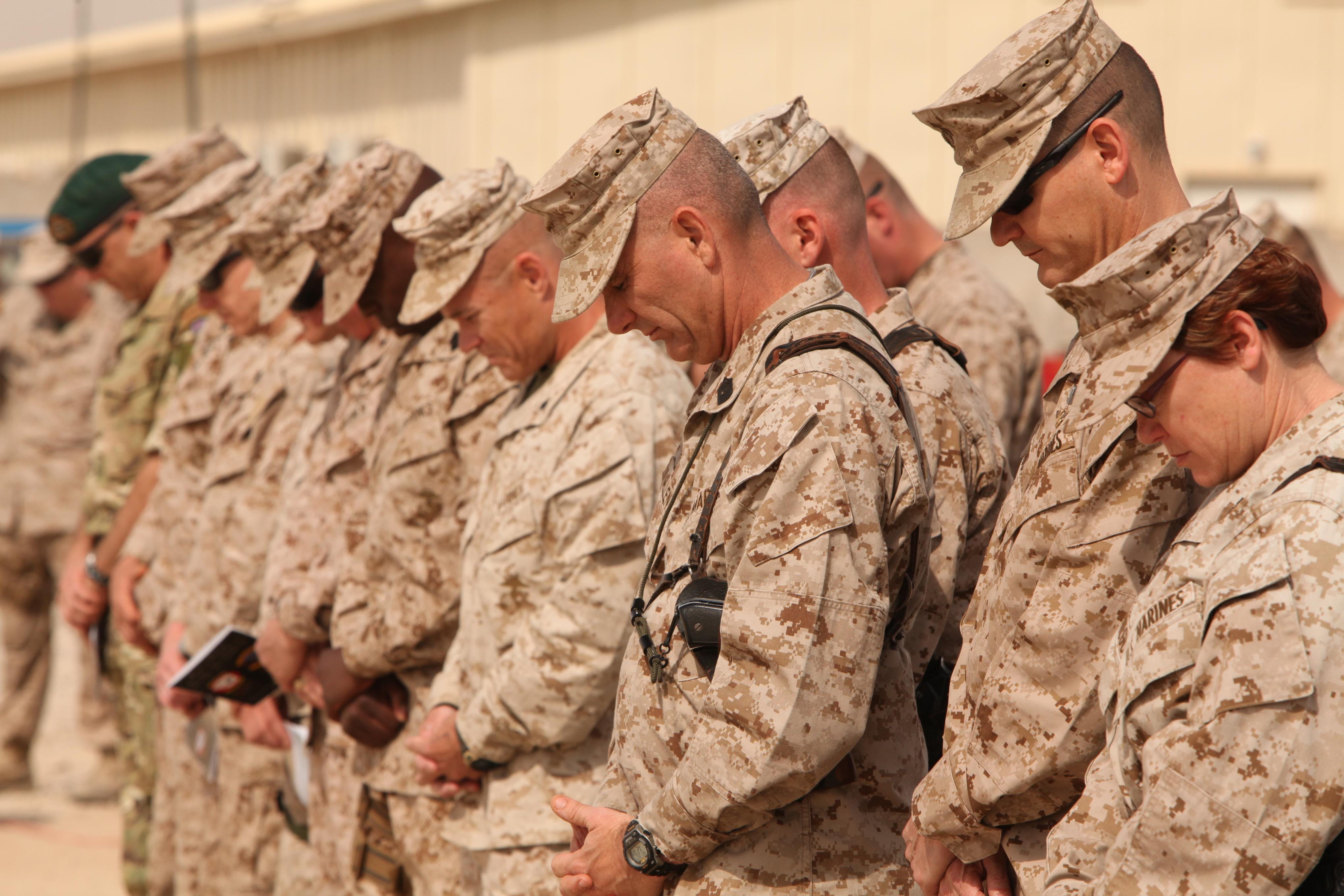
The US military is a microcosm of American society. Within its ranks, there exists a diversity of economic, educational, racial and ethnic, gender, family, and religious backgrounds. We know from history and experience that the various members of a unit can only succeed if they function and fight as one. Morale, cohesion, and esprit de corps are the result of mutual respect, appreciation of differences, selfless intent, and fulfilling commitments. Leaders must address and eliminate any barriers, such as discrimination and prejudice, to individual and team effectiveness.
It is for these reasons the US military practices religious pluralism—acknowledging the history that members of the military find strength to perform difficult tasks, and comfort from the horrors of war, in their respective faith traditions. Nevertheless, the Secretary of Defense is undermining one of the foundational and constitutional principles of the US military: the provision of free exercise of religion with neither favoritism toward nor bias against any faith group.
What has he done to sabotage the free exercise of religion?
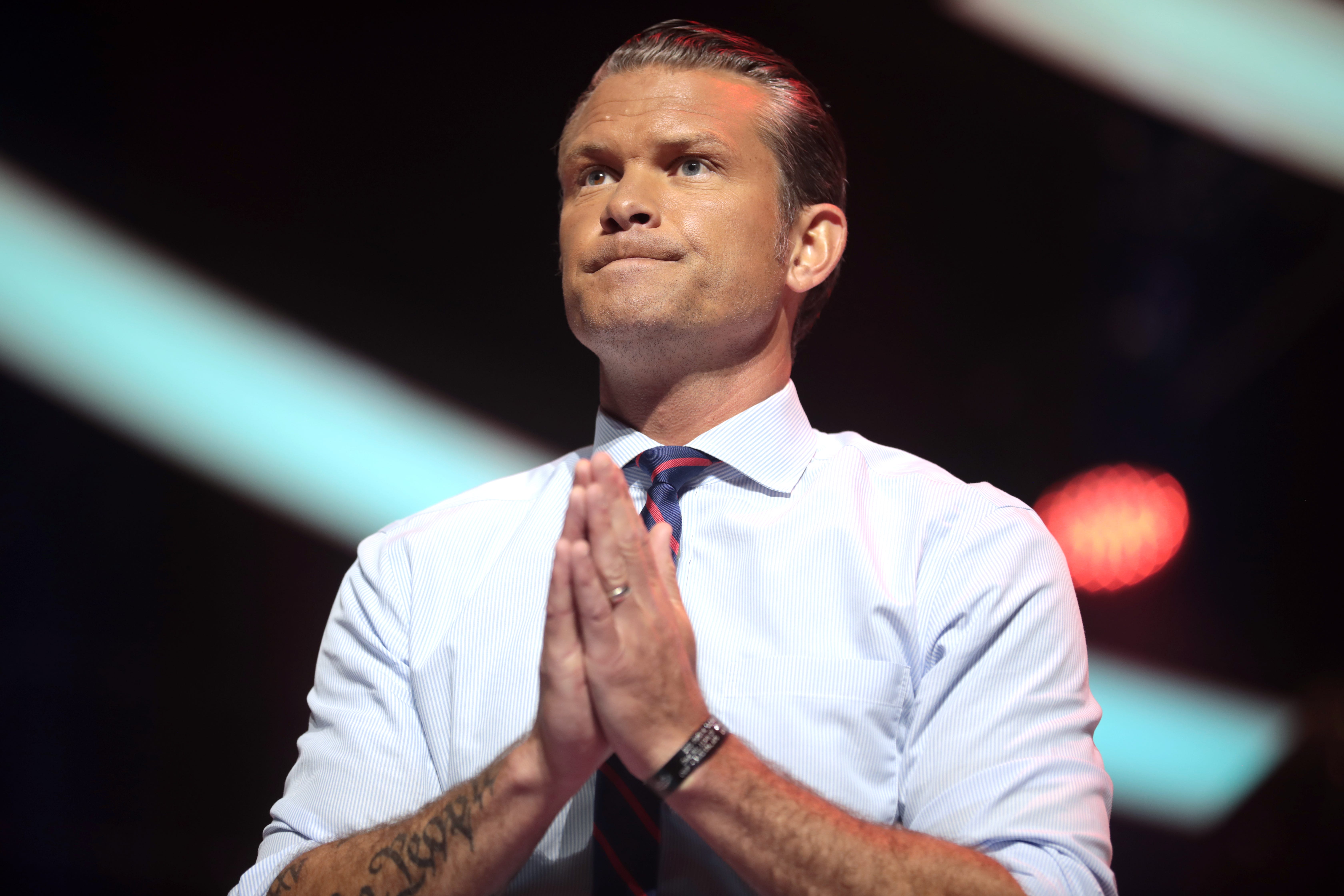
Soon after assuming his position as the Secretary of Defense, Pete Hegseth launched a “Secretary of Defense Christian Prayer & Worship Service” in May 2025, held monthly during work hours in the Pentagon auditorium, and broadcast on the building’s internal TV network. It is billed as voluntary, open to both civilian employees and uniformed personnel. Although some may appreciate the religious practices of the senior leader of the US military, his actions are harmful to religious pluralism.
First, performing and providing for the free exercise of religion falls under the role and responsibility of the chaplaincy. In the military, a chaplain advises the unit commander on matters of religion, morale, and morality, and develops and executes the commander’s religious support plan. This involves supervising and sponsoring all religious support activities that occur within a unit or on an installation.
As an installation chaplain and as the Pentagon Chaplain, followers of a variety of faith groups often approached me to request religious accommodation and the ability to conduct religious activities. We interviewed and thoroughly vetted the applicants and their request to ensure adherence to values and standards. Every religious activity has a chaplain sponsor who ensures the free exercise of religion and that there are no discriminatory or derogatory practices.
To my knowledge and based on publicly available information, no chaplain is sponsoring and supervising Hegseth’s prayer services. Instead, these prayer services are being planned and executed directly from the Office of the Secretary of Defense. Without a chaplain sponsor, there is no subject matter expert to offer advice, to ensure free exercise protection, to ensure accountability against disrespectful or derogatory practices, and to provide feedback on the impact of the prayer services on the morale of the armed forces. He has effectively sidelined the chaplaincy.
Second, in planning and conducting these prayer services himself, Secretary Hegseth has elevated one faith group above the others. Here we have a senior leader hosting a religious activity that is clearly biased toward one religious perspective. The implied message is that his brand of religion is to be favored.
This is not to say that senior leaders cannot publicly practice their faith. It is to say that senior leaders must account for how their personal religious practices impact the morale and cohesion of the force, and allow individuals discretion to practice their chosen religion. Favoring one group over the others not only violates the establishment clause in the Constitution but undermines morale and cohesion.
The message Hegseth’s prayer program sends to me is that since he is the senior leader of the military, he has the authority to disregard law and policy, and ignore the adverse impact of his biased religious practice on his subordinates. As a chaplain, I would advise any commander against engaging in this kind of activity.
Third, the speakers at these prayer services are exclusively of one segment of ultraconservative, evangelical Protestantism, and are primarily his former or current pastors associated with the denomination the Communion of Reformed Evangelical Churches (CREC). Speakers have included:
Brooks Potteiger, Hegseth’s current CREC pastor in Tennessee.
Chris Durkin, Hegseth’s former pastor, who leads a Southern Baptist church in Colts Neck, New Jersey.
Doug Wilson, the Idaho pastor and founder of the CREC, who has espoused abhorrent views on topics including women’s suffrage and slavery. Per Politico, he has offered a “qualified Biblical defense of slavery” and used vulgar language to defend “a masculinist and explicitly patriarchal style of evangelicalism.”
Franklin Graham, CEO of Samaritan’s Purse, whose message on December 17 included statements that God “also hates” and is “a god of war,” reading a passage about the destruction of the Amalekites without mercy for women, children, or animals. The implication is the faith he professes and practices is the one for all members of the Department of Defense.
When I served at the Pentagon Chaplain’s Office, we had a standardized policy of vetting every speaker that we considered inviting. Our intent was to ensure that speakers’ messages were consistent with the values and mission of the Department of Defense, that they were focused on building up and not disparaging any individual or group, and that they would not have an adverse effect on morale and operational effectiveness. We were also concerned about not reinforcing favoritism toward one specific faith group. We were strongly committed to religious pluralism, respecting all faith groups, and providing religious support to each of the over 25,000 military and civilian workers of the Pentagon.
Why does this matter? Why should you care?
We must be concerned about anything or anyone that is a threat to unit cohesion, morale, individual and team effectiveness, and operational readiness. The actions of Secretary Hegseth have had an adverse effect. The Military Religious Freedom Foundation (MRFF) reports that complaints involving religious discrimination have tripled, with about 200 focused on the promotion of Christian nationalism. MRFF Executive Director Mikey Weinstein has argued that Secretary Hegseth’s service is inherently coercive. I agree.
An emailed invitation for one of the prayer services featuring “SECWAR” and a cross resulted in a flurry of complaints from active-duty members, veterans, and contractors, with one complaint describing the invitation “stark, depressing, almost threatening.” Americans United for Separation of Church and State sued the Pentagon over a records request about the services’ cost, guests, and complaints, alleging Hegseth is “abusing the power of their government position … to impose their preferred religion on federal workers.” No ethical leader—no military commander with the best interests of our armed forces at heart—would intentionally disrupt unit cohesion and operational readiness by promoting a singular, personal, religious ideology. But this Secretary of Defense does.
These are not chaplain-run, denominationally neutral services. They are Hegseth-organized events featuring his personal CREC-affiliated pastors and allied evangelical figures, several with documented Christian nationalist views. The pattern (one-faith programming, military venue, workday timing, livestream to the whole building) is driving both the “coercion” complaints from service members and the Establishment Clause litigation, rather than any single incident alone.
Secretary Hegseth demonstrates a persistent pattern of undermining the systems of the military. He has undermined the chain of command, good order, and discipline by ending investigations and reversing disciplinary action involving misconduct and unsafe actions—including by helicopter crew members and Blue Angels conducting low-level flyovers. He has corrupted the merit-based promotion system with discrimination by removing women and minorities from promotion lists and assignments, resulting in the loss of experience and expertise. He has ordered the removal of rank from display on the uniforms of chaplains. He has revised the list of recognized faith groups from 211 to 31, resulting in consolidating or eliminating distinctive practices.
I served as a chaplain for 30 years, overlapping the service of 12 Secretaries of Defense. Almost without exception, I saw each of them as unifying figures who provided a strategic vision and ensured we had the training, the equipment, the resources, the weapons, and the culture and climate to function, fight, and win. With Secretary Hegseth, I have sincere concern for our military, observing his divisiveness, self-exaltation, and promotion of a personal agenda, rather than the operational readiness of the members of the military. Religious practice must not result in division but unity and empowerment.
Ken Williams is a veteran with over 30 years of service as a chaplain in the U.S. Army. His assignments include the Pentagon Chaplain and Senior Military Fellow of Ethics and Leadership at the National Defense University. He holds a PhD in Leadership and Organizational Change and has taught graduate level courses in ethical leadership in foreign affairs. He is a member of Veterans for Responsible Leadership.

You cannot have freedom of religion without freedom from religion.
Just a slimy, disgusting cult. The ignorance and arrogance of Hegseth is appalling.